
 Home
Home
 About
About 
 Blog
Blog
 Autism strengths
 AuDHD
AuDHD
 Autism tests
 Autism assessments
 Store
Store
 Contact

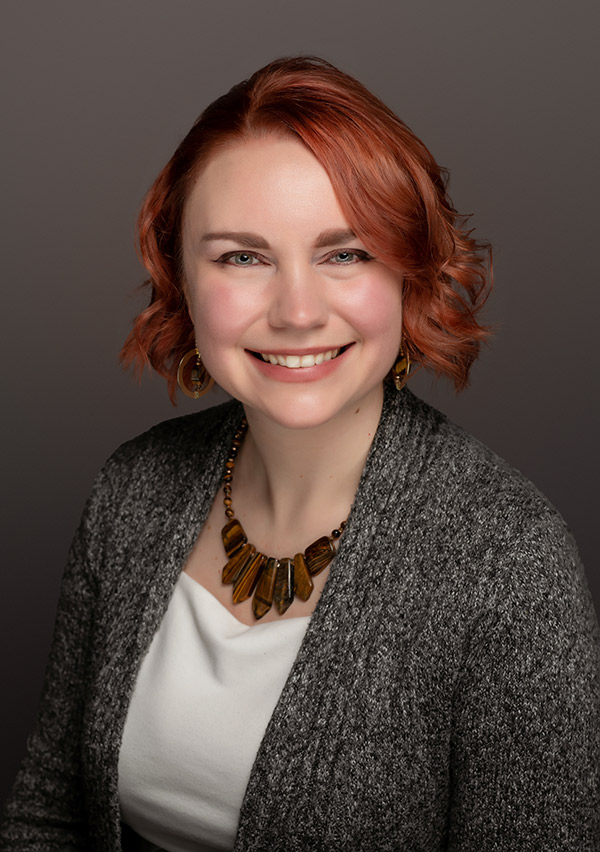
Hello friends! I’m Dr. Amy Marschall (but I encourage my clients to call me Amy) (she/her). I’m a clinical psychologist and diagnostician with Embrace Autism. I’m AuDHD and diagnosed as an adult, and I had been diagnosing both autism and ADHD for years before realizing that the traits also applied to my life.
My why
I have always tried to make an affirming and positive experience for my clients, but it became even more important to me when I got my own diagnosis. When I first got evaluated, I was misdiagnosed—the evaluator said that because I am married, employed, and made eye contact during the evaluation, I couldn’t possibly be autistic. They also told me that my stims were actually fidgets, but when I asked how they would define the difference, they floundered.
After a few months of reflecting, I decided to get a second opinion and learned that, actually, I am autistic! Since then, it has been my goal to ensure that no one else has that invalidating, inaccurate evaluation experience. I do this not only by conducting neurodiversity-affirming, culturally competent evaluations through a lens of understanding the infinite ways that autistic people can look, but also by creating continuing education for other diagnosticians to improve their ability to identify autistic clients, especially those who have been overlooked in the research.
What I do
What don’t I do? My professional work is varied because I like to keep things interesting, and my career is truly my special interest.
Clinical
I provide diagnostic evaluations via telehealth to individuals across the lifespan. I also have a small therapy practice where I support mostly children but also some adults. My primary clinical focuses are ADHD, autism, and PTSD, and I strive to provide neurodiversity-affirming and trauma-informed care to all my clients.
In 2020, my good friend and colleague Ashley Cairns invited me to join her as Clinical Director of A Change for Better, an organization that aims to provide affordable mental health services while paying mental health providers a living, sustainable wage. Over the last two years, my work with ACFB has allowed me to provide more than $100,000 USD in pro-bono clinical services.
Teaching
I am an adjunct professor at Prescott College and have taught as an adjunct at the University of Hartford in the past. Additionally, I teach continuing education for licensed mental health professionals with PESI, the Telehealth Certification Institute, Core Wellness, the Institute of Child Psychology, Spring Health, and through my own business. My hope is to help other providers develop the skills to be neurodiversity-affirming and trauma-informed with their clients.
Speaking
In addition to teaching, I participate in webinars and in-person speaking engagements. Unlike continuing education, these engagements are aimed at helping the general public better understand mental health, neurodivergence, and disability justice. I have spoken for various organizations, including ADDitude Magazine and ADHD Online.
Writing
Since 2020, I have maintained a blog that provides tips for therapists and information about mental health for the general public. I also have a blog on Psychology Today aimed at educating the public about neurodiversity-affirming mental health care and neurodivergence. I write for other publications as well, including Everyday Health and VeryWell Mind.
Authorship
I am the author of several books, including multiple books on telemental health and others on neurodiversity-affirming care. My latest book, A Neurodiversity-Affirming Approach to ADHD, is available for pre-order and will be released in February 2026. I am also currently working to co-author a manuscript about the identity development of autistics who did not know they were neurodivergent until adulthood.
Consultation
I provide consultation services to mental health companies to ensure that their procedures align with ethical requirements. Is that everything? I am probably forgetting something.
Education
I did my graduate work at the University of Hartford, obtaining my master’s degree in 2013 and my doctorate in 2015. My dissertation focused on teaching residential life departments on college campuses how to respond in a trauma-informed way after a student experiences a sexual assault.
My pre-doctoral internship and post-doctoral training both occurred in Arkansas. I matched with the Psychology Training Consortium, which was founded to bring more psychologists to underserved, rural areas, and my supervisor invited me to stay on after graduation. This training was assessment-focused, and I learned a lot about navigating ethical boundaries when providing mental health care in rural areas. It is challenging to make space for everyone who needs support when the next-nearest psychologist is more than 50 miles away!
Through my internship, I was trained in Trauma-Focused Cognitive Behavioral Therapy (TF-CBT), an evidence-based treatment for trauma survivors, and I was certified in this in 2016.
I’m currently licensed to practice psychology in South Dakota, North Dakota, Montana, Wisconsin, New York, South Carolina, and Florida, and I am in the process of applying for licensure in Louisiana. I am a PsyPact provider, which allows me to offer telehealth services in more states.
I am also a registered clinical psychologist in New Zealand—in March 2020, I had a job offer in Auckland, and you will not believe what happened next.
My work with Embrace Autism
I had a fangirl moment when I saw that Embrace Autism was looking for psychologists; I had been recommending their tools to my clients for years and had been following their work. I am so glad to be here and working with this amazing team!
Contact
To reach me, you can use the contact form on Embrace Autism’s Contact page, or use the form at the bottom of the Autism assessments page.





Comments
Let us know what you think!