
 Home
Home
 About
About
 Blog
Blog
 Info hubs
 Autistic burnout
 AuDHD
AuDHD
 Autism strengths
 Autism tests
 Autism assessments
 Store
Store
 Contact


Note: Originally published in 2018. Fully rewritten in July 2025 to reflect new research and lived experience.
I. Introduction
For years, it was widely believed that autistic individuals were largely protected from developing addictions. This assumption was based on a number of surface-level observations: that many autistic people are risk-averse, that they often avoid social situations where substance use typically begins, and that their preference for routine and predictability would act as a buffer against compulsive or chaotic behaviours like drug and alcohol misuse. The belief was also shaped by an underestimation of autistic emotional complexity and the erroneous idea that a lack of social motivation meant a lack of vulnerability. However, over the past decade, this narrative has undergone a dramatic shift.
II. Prevalence & emerging trends
As stated while earlier research suggested low rates of substance use among autistic individuals—particularly those with intellectual disability—newer findings highlight that rates vary widely based on cognitive profile, co-occurring conditions, and demographic factors.[1]Increased risk for substance use-related problems in autism spectrum disorders: A population-based cohort study (Butwicka et al., 2017)[2]Substance use disorder in individuals with autism spectrum disorder: A retrospective chart review in a specialized addiction unit (Ressel et al., 2022)
Large population-based studies confirm that autistic individuals without intellectual disability are at significantly increased risk for substance use disorders (SUDs). In these groups, the prevalence of SUD can be nearly double that of non-autistic individuals, particularly when co-occurring ADHD or mood disorders are present.[3]Addressing medical needs of adolescents and adults with autism spectrum disorders in a primary care setting (Saqr et al., 2020)[4]Substance use disorder in individuals with autism spectrum disorder: A retrospective chart review in a specialized addiction unit (Ressel et al., 2022) For example, a 2022 retrospective review found that among autistic patients in addiction services, the majority had an IQ above 85 and had not been diagnosed until adulthood—suggesting both diagnostic overshadowing and unmet needs during earlier life stages.[5]Substance use disorder in individuals with autism spectrum disorder: A retrospective chart review in a specialized addiction unit (Ressel et al., 2022)
Conversely, autistic individuals with intellectual disability show lower rates of substance use, likely due to increased supervision, reduced access, and lower social engagement in substance-using contexts.[6]Increased risk for substance use-related problems in autism spectrum disorders: A population-based cohort study (Butwicka et al., 2017) However, this subgroup is often underrepresented in addiction studies, which may mask certain risk patterns.
The presence of co-occurring ADHD has emerged as one of the most potent risk amplifiers. ADHD increases the likelihood of addiction significantly across all cognitive levels. Among autistic individuals without intellectual disability, the risk is estimated to be up to eight times higher when ADHD is present.[7]Increased risk for substance use-related problems in autism spectrum disorders: A population-based cohort study (Butwicka et al., 2017) This aligns with broader findings that ADHD contributes to impulsivity, executive dysfunction, and sensation-seeking—traits that can lead to earlier substance experimentation and reduced inhibitory control.
Gender and age also influence addiction risk in autism. Autistic men appear more likely to seek formal addiction services, though this may reflect underdiagnosis and masking in autistic women. Younger adults (ages 18–30) are most represented in recent studies, especially among those with late-diagnosed or less obvious presentations of autism who engage in self-medication for anxiety, depression, or sensory overload.[8]Increased risk for substance use-related problems in autism spectrum disorders: A population-based cohort study (Butwicka et al., 2017)
In addition to substance use, there is growing concern about behavioural addictions such as problematic gaming, gambling, and internet use. While prevalence rates vary, emerging evidence suggests that these behaviours may serve similar emotional or sensory regulation functions for autistic individuals and are often overlooked due to diagnostic overshadowing.[9]Autism, problematic internet use and gaming disorder: A systematic review (Murray et al., 2022) For some, these behaviours become compulsive and interfere with daily functioning—highlighting the need to expand the definition of addiction beyond substances alone.
Together, these findings suggest that addiction risk in autism is not universal, but rather influenced by neurocognitive and psychological profiles. Understanding who is at risk—and why—is crucial for effective screening, prevention, and treatment.
III. Neurobiological risk factors
Addiction is not merely a behavioural issue nor simply a matter of choice or impulse—it is a complex coping strategy deeply rooted in neurobiology. For many autistic people, recognizing and addressing those needs is the key to healing. Recent research has emphasized the importance of shared neural mechanisms between autism and substance use disorders (SUD), particularly in the dopaminergic system and cortico-striatal circuitry, which play critical roles in motivation, reward processing, and habit formation.
Dopaminergic dysregulation in autism & addiction
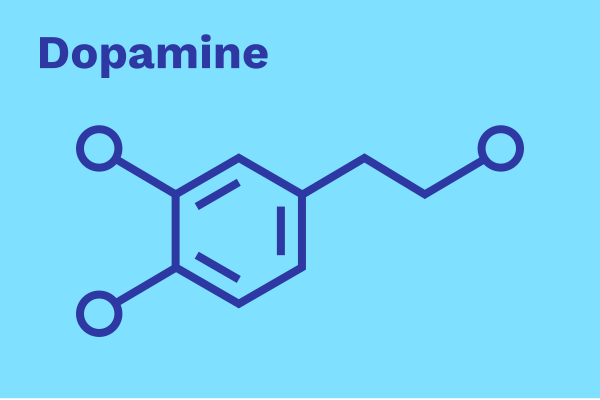
Autism is increasingly understood as involving dopaminergic dysregulation, particularly in the mesolimbic and mesocortical pathways—networks that are also centrally implicated in the development of addiction.[10]Dopamine Dysregulation in Reward and Autism Spectrum disorder (Blum et al., 2024) These systems regulate reward anticipation, reinforcement learning, and salience processing. In autistic individuals, disrupted dopamine signaling may contribute not only to social and sensory differences but also to compensatory reward-seeking behaviors, including those involving substances.[11]Autism Spectrum Disorders and Drug Addiction: Common Pathways, Common Molecules, Distinct Disorders? (Rothwell, 2016)
Recent neuroimaging studies using PET and fMRI have revealed that autistic individuals often exhibit reduced dopamine D₂/₃ receptor availability in both striatal and extrastriatal regions, including the nucleus accumbens, thalamus, and anterior cingulate cortex.[12]Extrastriatal dopamine D₂/₃ receptor binding, functional connectivity, and autism socio-communicational deficits: A PET and fMRI study (Murayama et al., 2022)[13]Striatal dopamine synthesis capacity in autism spectrum disorder and its relation with social defeat: An [¹⁸F]-FDOPA PET/CT study (Schalbroeck et al., 2021) These reductions are accompanied by altered functional connectivity within reward-related circuits and blunted dopamine release during incentive tasks—particularly in the caudate and putamen.[14]A simultaneous [¹¹C]raclopride PET and functional magnetic resonance imaging investigation of striatal dopamine binding in autism (Zürcher et al., 2021) These dopaminergic disruptions closely mirror neural patterns observed in individuals with substance use disorders and may help explain why some autistic individuals are especially sensitive to the reinforcing effects of addictive substances or behaviors. Such findings suggest that external reward-seeking may serve a compensatory role in response to diminished internal reward signaling, highlighting the importance of understanding addiction in autism as both neurologically and functionally distinct.
The striatum & habit formation
The striatum, a central structure in the basal ganglia, is one of the most studied brain regions in both autism and addiction research. It plays a critical role in habitual behaviour, procedural learning, and automatic action selection.[15]Drug addiction: Updating actions to habits to compulsions ten years on. (Everitt & Robbins, 2016) In both autistic individuals and those with SUD, the striatum shows structural and functional differences that may predispose individuals to rigid behavioral patterns, compulsions, and difficulty shifting away from established routines or reinforcers.[16]Substance use disorder in individuals with autism spectrum disorder: A retrospective chart review in a specialized addiction unit (Ressel et al., 2022)
Moreover, genes associated with both autism and addiction—such as NLGN3, CNTNAP4, and SHANK3—are active in the striatal region and influence synaptic transmission and dopaminergic signalling.[17]Variations analysis of NLGN3 and NLGN4X gene in Chinese autism patients (Xu et al., 2014) This genetic overlap further supports the idea that autism and addiction are not merely co-occurring by chance, but may share underlying neurobiological vulnerabilities.
In essence, the autistic brain’s tendency toward repetition, narrow focus, and high sensory reactivity, when combined with disruptions in dopamine-based reward systems, can increase the risk for developing addiction-like patterns of coping—particularly when external substances provide fast, reliable relief from internal distress.
IV. Psychological & emotional drivers
Beyond biological vulnerability, many autistic individuals face profound psychological and emotional challenges that increase their risk of developing substance use disorders (SUDs). These challenges often remain invisible or misunderstood, leading to delayed support and increased reliance on maladaptive coping mechanisms such as drugs, alcohol, or compulsive behaviors.

High rates of anxiety, depression, & trauma
Mental health conditions are significantly more prevalent among autistic individuals than in the general population. Studies consistently report that up to 70–80% of autistic people experience anxiety, and around 50% experience depression at some point in their lives.[18]Advancing health-care equity for autistic people: Mental health as a key priority (Wechsler et al., 2025)[19]Anxiety Prevalence in Youth with Autism: A Systematic Review and Meta-analysis of Methodological and Sample Moderators. (Thiele-Swift, H.N., Dorstyn, 2024). Traumatic experiences—ranging from sensory overwhelm to bullying, masking, and medical trauma—are also common and often go unrecognized due to diagnostic overshadowing.[20]Distinguishing between autism and the consequences of early traumatisation during diagnostic assessment: A clinical case study (Kildahl et al., 2020)
These overlapping conditions create a landscape of chronic distress. When mental health needs are unmet or misunderstood, some autistic individuals turn to substances as a way to escape or blunt their emotional pain.
Alexithymia & internal disconnect
A critical but under-discussed contributor is alexithymia—a condition characterized by difficulty identifying, interpreting, and expressing one’s emotions. While not universal, alexithymia is estimated to affect between 40–70% of autistic individuals.[21]Investigating alexithymia in autism: A systematic review and meta-analysis (Kinnaird et al., 2020) This internal disconnect can leave people unable to recognize the early signs of emotional overwhelm, resulting in sudden emotional flooding and reactive behavior.
Because the distress is often felt but not named, substance use may become a way to regulate or mute the emotional chaos without understanding its origin. In this way, addiction is less a pursuit of pleasure and more a desperate act of emotional self-preservation.[22]Emotion regulation in substance use disorders: A systematic review and meta-analysis (Aldao et al., 2022)
Impulsivity & self-medication
Autistic individuals—especially those with co-occurring ADHD—often struggle with impulsivity, executive dysfunction, and emotional regulation.[23]Examining the clinical correlates of autism spectrum disorder in youth by ascertainment source (Joshi et al., 2014) These challenges make it harder to pause, reflect, and use coping strategies in moments of distress. Instead, individuals may turn impulsively to substances that provide immediate relief, especially when these behaviors are reinforced by social norms or peer modeling.
Self-medication is particularly common in late-diagnosed or undiagnosed autistic adults who spent years misunderstanding their own needs. In such cases, alcohol, cannabis, or prescription drugs may become tools for coping with intense social anxiety, sensory overload, or the emotional exhaustion of masking.
Coping with sensory & emotional overload
For many autistic individuals, the world can feel painfully overstimulating. Bright lights, loud environments, unspoken social rules, and emotional unpredictability may lead to cumulative sensory or emotional burnout. In these moments, substances are often used not to seek novelty—but to dampen the volume of sensory or emotional input.[24]Addressing medical needs of adolescents and adults with autism spectrum disorders in a primary care setting (Saqr et al., 2020)
For some, alcohol may ease the tension of entering a crowded room. For others, cannabis may slow racing thoughts or reduce social inhibition. In either case, the substance functions as a compensatory regulation strategy, temporarily replacing unavailable emotional support systems or tools for self-regulation.
V. Social & environmental contributors
While neurobiological and emotional vulnerabilities help explain individual risk, social and environmental factors are equally critical in understanding why some autistic individuals develop substance use disorders. Many turn to substances not only to manage internal distress but also to survive in environments that are confusing, alienating, or outright hostile.
Peer pressure & isolation in adolescence
Adolescence is a pivotal time for social identity development, but for many autistic teens, it is also a period marked by profound social exclusion. A systematic review by Gies et al. found that autistic adolescents often experience significant barriers to belonging, driven by challenges such as sensory sensitivity, differences in nonverbal communication, and difficulty navigating unspoken social norms.[25]A Systematic Literature Review of Autistic Adolescents’ Understanding and Experiences of Belonging (Gies et al., 2025)
These factors contribute to chronic peer rejection and social isolation. In response, some autistic youth may adopt behaviors—such as drinking, vaping, or drug use—not because of personal inclination, but as a means to avoid bullying or signal social alignment with peers. Wang and Susumu (2024) further highlight that autistic students are at elevated risk of bullying victimization, and that lack of support or diagnosis may increase vulnerability to harmful coping strategies and internalized stigma.[26]Factors of bullying victimization among students on the autism spectrum: A systematic review (Wang and Susumu, 2024)

Substance Use as a Social Lubricant
For autistic teens and adults who feel disconnected or alienated, substances can act as social lubricants, temporarily lowering inhibition and easing anxiety in group settings. Alcohol, in particular, is often used to “take the edge off” in environments that are loud, unpredictable, or emotionally demanding. Cannabis may help reduce sensory overwhelm or soften the emotional toll of masking.
This use is not typically recreational in the traditional sense. For many autistic individuals, substance use is functional—a way to enter social spaces that might otherwise be intolerable or to dampen the internal distress of feeling out of sync.[27]Increased risk for substance use-related problems in autism spectrum disorders: A population-based cohort study (Butwicka et al., 2017) Over time, this functional use can become habitual and entrenched, especially in the absence of safer or more affirming coping strategies.
Masking, misfit, & unmet needs
Masking—the suppression of autistic traits in order to appear more neurotypical—is now widely recognized as a risk factor for mental health problems, burnout, and identity confusion.[28]“Putting on My Best Normal”: Social camouflaging in adults with autism spectrum conditions (Hull et al., 2021) Autistic individuals who mask extensively may appear well-adjusted externally while suffering profoundly internally. This disconnect often leads to late or missed diagnoses, leaving individuals without the language or support to make sense of their struggles.
Many autistic adults report that their substance use began not out of rebellion, but out of exhaustion—from trying to meet social expectations that constantly violated their sensory, emotional, or cognitive needs. In environments that punish difference rather than accommodate it, substances become a way to endure rather than to escape.
Systemic barriers & diagnostic overshadowing
Even when autistic individuals seek help for addiction, they often encounter systemic barriers. Clinicians unfamiliar with autism may misinterpret behaviors, under-recognize sensory needs, or pathologize communication differences. This phenomenon—known as diagnostic overshadowing—occurs when autism is either missed entirely or used to explain away symptoms of co-occurring mental health or substance use disorders.[29]Addressing medical needs of adolescents and adults with autism spectrum disorders in a primary care setting. (Saqr et al., 2020)[30]Substance use disorder in individuals with autism spectrum disorder: A retrospective chart review in a specialized addiction unit (Ressel et al., 2022)
Additionally, most addiction treatment programs are not designed with autistic individuals in mind. Group-based interventions that rely on abstract discussion, unstructured emotional expression, or high sensory input can be alienating or inaccessible. Without autism-adapted supports, individuals are often left to navigate both recovery and identity discovery in isolation.
VII. Real-life narratives & case examples
Behind the statistics and neural pathways are human stories—stories of autistic individuals navigating distress, masking, loneliness, and eventually finding themselves entangled in addiction. These narratives not only illustrate the research findings, but also highlight the emotional truth of how addiction often functions in autistic life: not as rebellion or thrill-seeking, but as an improvised survival strategy in a world that doesn’t fit.

Matthew’s Story, Revisited
Matthew Tinsley’s account, first published in Asperger Syndrome and Alcohol: Drinking to Cope, was among the earliest public reflections linking undiagnosed autism to substance dependence. Like many others, Tinsley began using alcohol to manage overwhelming anxiety, sensory overload, and social confusion. It wasn’t until his autism diagnosis at age 44—after years of debilitating alcohol use and a near-fatal health crisis—that he began to understand the root of his distress. Sobriety came only when he could name his neurodivergence and replace alcohol with safer regulation strategies and social support.[31]Asperger syndrome and alcohol: Drinking to cope? (Tinsley & Hendrickx, 2008)
In the years since, countless others have echoed his experience—though the substances, genders, and journeys vary widely.
Jade’s Story (Age 29, Diagnosed at 26)
“I used to think I had no addiction issues because I never partied. But I was vaping constantly and using weed just to eat, sleep, and function. It started in university when I was masking 24/7 and crashing every night. I didn’t know I was autistic—I just thought I was broken.”
Jade, a late-diagnosed autistic woman, began using cannabis to regulate her appetite and calm social anxiety. Eventually, it became her only way to decompress. It wasn’t until a therapist familiar with autism identified her sensory shutdowns and interoceptive challenges that she began to understand her dependence. “I wasn’t addicted to the high—I was addicted to being able to feel normal in my body for once.”
With occupational therapy, trauma-informed support, and harm-reduction strategies tailored to her sensory profile, Jade now uses a weighted blanket, scheduled “no-mask” days, and deep-pressure therapy instead of substances to manage her needs.
Evan’s Story (Age 42, Diagnosed at 39)
“I didn’t fit in at all as a kid, but when I drank, I suddenly could hold a conversation. People liked drunk Evan. So I kept drinking.”
Evan, an autistic trans man, found alcohol gave him a temporary pass into a world that otherwise rejected him. It masked his autistic speech patterns, dampened his social anxiety, and made rejection feel less sharp. Over time, though, he began blacking out, losing jobs, and experiencing dangerous dissociation. He was hospitalized at 35 and diagnosed with depression—but no one screened him for autism until four years later, during a psychiatric intake for a relapse.
“I cried after the autism diagnosis. Not because I was upset—but because everything finally made sense. I wasn’t weak. I was overwhelmed.” Evan is now two years sober, in part because his addiction treatment team adapted their approach to fit his communication style, pacing, and sensory boundaries.
What these stories teach us
Across these accounts, common themes emerge:
- Late or missed autism diagnoses, especially in those with high masking or marginalized identities.
- Substance use as a regulatory strategy, not just a form of escapism.
- Alexithymia, trauma, and isolation as compounding factors in both onset and recovery.
- Recovery often beginning only after identity affirmation and autism-informed support.
These stories challenge us to look beyond traditional models of addiction. They reveal that many autistic individuals are not abusing substances for pleasure, but to access basic functioning, connection, or relief. When we validate their underlying needs—and replace substances with affirming alternatives—recovery becomes not only possible, but sustainable.
Continue reading about Autism and addiction in part two of this topic.





Comments
Let us know what you think!